

Quick Facts why Businesses must Learn about SAP Partner Accely before using its Service
Enterprise resource planning platforms are often marketed as configurable solutions that can be deployed through parameter settings and standard modules. While configuration plays an important role, long-term ERP success is fundamentally engineered. SAP systems support complex business models, regulatory requirements, and integration demands that go far beyond basic setup. Learn about SAP partner Accely means understanding this reality.
Accely approaches SAP implementation as a technical endeavor. It must be treated as an enterprise software platform that must be designed, coded, tested, and maintained with the same rigor as any large-scale application. This perspective shifts expectations from quick deployment to sustainable system architecture.
Translating Business Logic into SAP Architecture
At the heart of SAP development lies the translation of business requirements into system design. Enterprises operate through rules, workflows, and data relationships that must be expressed precisely within the ERP environment. Accely plays a critical role in this translation, bridging the gap between functional needs and technical execution.
This process begins with architecture design. Accely evaluates how processes should be modeled, which components require customization, and how data should flow across modules. Decisions made at this stage influence performance, scalability, and maintainability. By applying structured design principles, Accely ensures that SAP solutions align with both current operations and future growth.
Customization and Integration through Development Discipline
No two enterprises operate the same, which makes customization an essential part of SAP delivery. However, unmanaged customization can lead to fragile systems that are difficult to upgrade or extend. Accely addresses this challenge by applying software engineering discipline to SAP development.
Custom code is designed with clear interfaces, documentation, and upgrade paths. Integrations with external systems, such as CRM platforms, analytics tools, or third-party services, are built using standardized protocols and APIs. This approach treats SAP not as a closed system, but as a core application within a broader enterprise software ecosystem.
Testing, Quality Assurance, and System Reliability
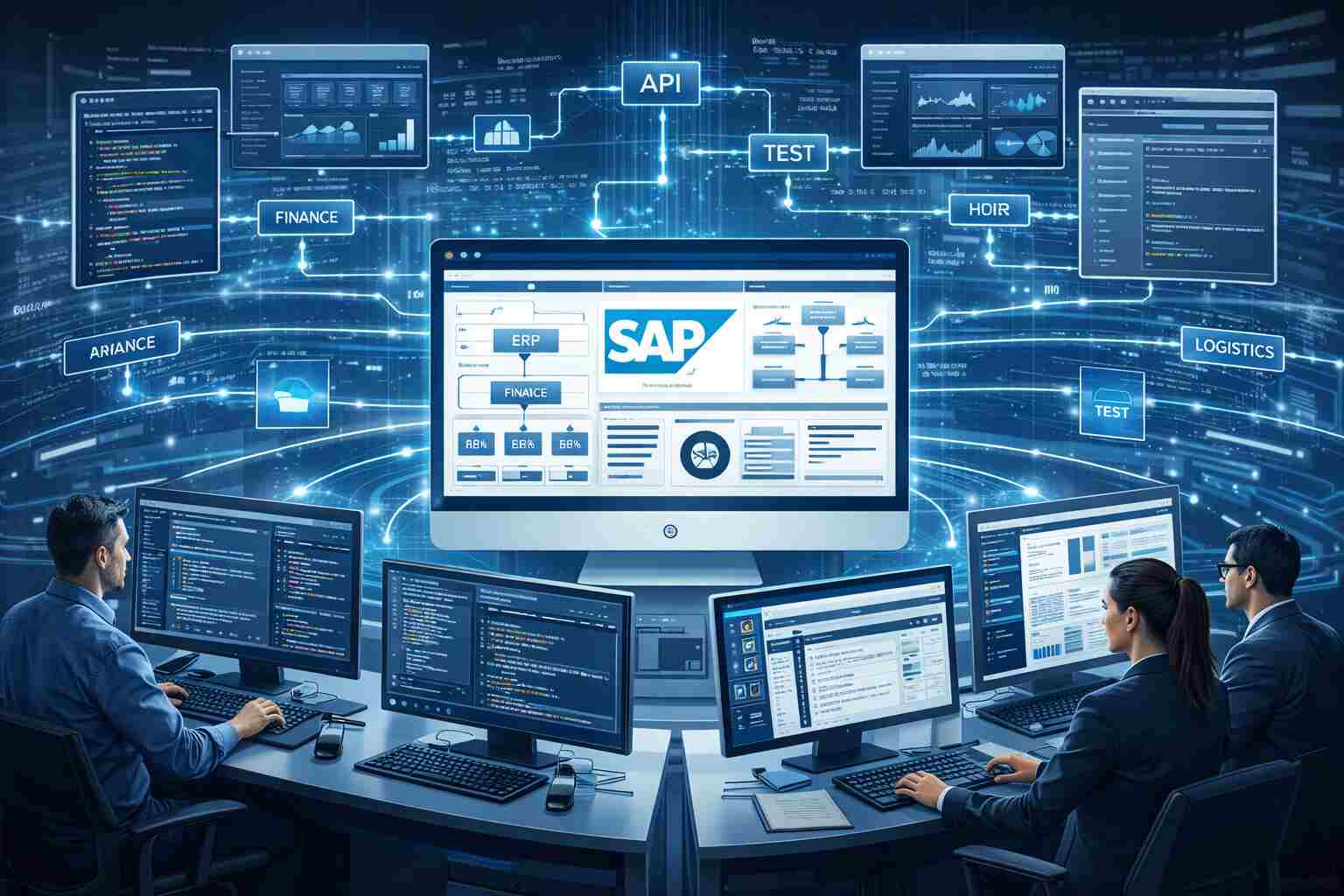
In software development, reliability is achieved through rigorous testing, not assumptions. ERP systems are no exception. Changes to SAP environments can affect finance, supply chains, and compliance processes, making quality assurance a critical responsibility.
Accely incorporates structured testing practices into SAP delivery, including:
- Unit testing
- Integration testing
- User acceptance validation
These practices help identify defects early, reduce deployment risk, and ensure that systems behave as expected under real-world conditions. By embedding testing into the development lifecycle, Accely supports ERP environments that enterprises can trust.
Continuous Improvement and Long-Term Maintainability
Enterprise systems are never finished. Business models evolve, regulations change, and technology advances. A development-focused SAP partner recognizes that implementation is the beginning of a lifecycle, not the end. Accely supports continuous improvement through system optimization, performance tuning, and controlled enhancement delivery.
By maintaining clean code structures, modular designs, and clear documentation, Accely helps organizations adapt their SAP systems without destabilizing operations.
This focus on maintainability ensures that ERP platforms remain relevant and resilient over time.
Engineering ERP for Enterprise Scale
Viewing SAP implementation through a development lens reveals what distinguishes technical partners from configuration-focused providers. Accely applies software engineering principles to build ERP systems that scale, integrate, and endure. By treating SAP as code to be engineered rather than software to be installed, it enables enterprises to operate on systems designed for complexity, reliability, and long-term growth.